
Humanity, Truth, and Religions; in Gotthold Ephraim Lessing’s Play Nathan the Wise
By: Masoumeh Boodari
Introduction
Gotthold Ephraim Lessing (1729–1781) was one of the thinkers of the Age of Enlightenment. At the same time as the philosophical transformations in European society, he tried to raise awareness among his audience by writing treatises on the philosophy of religions. In his last play, he chooses a very significant period of history: the time of the Crusades.
Here, while briefly referring to the causes of the two-hundred-year Crusades in the eleventh and twelfth centuries, some points about Lessing’s thoughts—especially in the play Nathan the Wise—will be mentioned.
Lessing was an independent writer. He had no attachment to the court or centers of power, and he lived through working as a librarian. In 1754, he became acquainted with a Jewish philosopher named Mendelssohn, and their friendship lasted until the end of his life. Mendelssohn constantly sought to connect Christians and Jews.
According to Lessing, reason is the cause of humanity’s dignity and superiority over other creatures. The duty of humans is a constant effort to attain truth. Lessing considers man not the possessor of truth, but its seeker. He says: “Even if God held truth in His right hand and the ways to reach truth in His left, I would choose His left hand.”
Lessing eliminated the distance between the spectators and the heroes of the play so that they would consider themselves part of the heroes’ fate and sympathize with them more. He also chose another realm for spreading his enlightened ideas: animal fables. While critiquing and examining others’ works, he himself used this method.
He compiled the book Laocoön as literary criticism and critiqued the prevailing opinion about the art of poetry. He finished his last play, Nathan the Wise, in 1778 and published it in early 1779. This play was first performed in Berlin Theater in 1783, two years after the author’s death. Later, Schiller staged it with some changes and it received greater acclaim. Afterwards, it was performed many times in Vienna and many other German cities.
In the later years of his life, Lessing turned to philosophy and history and made plans for it. In his opinion, humanity moves, according to divine will, toward the flourishing of humanity and the realization of freedom.
Lessing, who introduced himself as a follower of Spinoza’s philosophical thought, believed in the unity of religions and a transcendent view of divine religions. He wrote Nathan the Wise mainly to criticize the power of the exclusivist Church—a church that, even years after Lessing’s death, could condemn many people to execution with a single excommunication order.
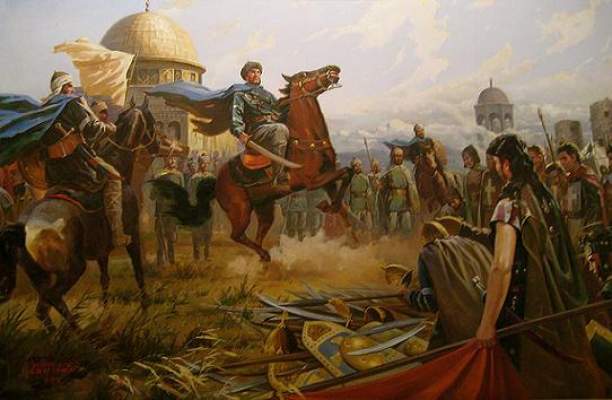
Nathan the Wise was published in early 1779. Its main subject was the discovery of “truth,” with emphasis on the discussion of the unity or pluralism of divine religions; that is, one of the most universal questions of humanity. Lessing, who is considered one of the intellectuals of the Age of Reason, wrote this play by choosing a page of history dedicated to the era of the Crusades and the rule of Sultan Saladin in Jerusalem—one of the most critical periods in the history of confrontation between the three divine religions of Judaism, Christianity, and Islam—in a region where followers of all three religions sought dominance over the land of water, light, and illumination (Jerusalem).
That is why we see that the play Nathan the Wise is full of allusions and hints criticizing the Church, based on historical evidence. The characters also correspond somewhat with reality. All of this is influenced by the fact that Lessing himself had translated Voltaire’s book The History of the Crusades into German.
Story Summary
The story of the play begins when Sultan Saladin, the leader of the Muslims, prevents the execution of a young Crusader because of his facial resemblance to his brother, Assad. On the day Nathan the Jew’s house catches fire, this same young Crusader—who had actually entered Jerusalem for war—bravely enters Nathan’s house and saves his daughter Recha. Recha falls in love with this young man.
Recha’s nurse, a devout and believing Christian who believes miracles occur in the land of Jerusalem, knows that Recha is not Nathan’s biological daughter and that she was baptized at birth. When Nathan returns from his trip, the nurse tells him about the fire and the young Crusader’s bravery. Nathan, with great generosity, tries to get to know him, but the young man refuses. Here, the young Crusader introduces himself as Curt von Stauffen.
On the other hand, at the court, Sittah, Saladin’s sister, along with Al-Hafi, the treasurer, are worried about the Sultan’s extravagance. The Sultan himself sees the solution in Al-Hafi asking his wealthy Jewish friend—known as Nathan the Wise—for financial help. But Al-Hafi, who is originally a Parsee from India, prefers not to get involved in this matter and return to his former dervish clothes rather than be the treasurer of such a generous and open-handed sultan.
Thus, Nathan is summoned to the court. However, Saladin, without paying attention to the court’s financial issues, asks Nathan—who is famous for his wisdom and whose enlightened thoughts are known everywhere—his opinion about religions and which of these three divine religions is superior. Nathan cleverly answers in the form of the Parable of the Ring: the legacy of a father to his three sons…
In the final scene at the Sultan’s court, the same document reveals that these two are the children of Assad, Saladin’s brother, and Sittah. In truth, all these four or five people from different religions are connected through blood ties and also adoptive father-child relationships.
This play, which has a relatively poetic and verse-like language, is structured classically in five acts. The characters of the play also fully correspond with historical reality and their social positions. For example, we see that the way the Sultan plays chess with his sister and his generosity in losing quickly is a sign of Saladin’s noble thinking regarding giving to others without regard to apparent wins and losses and meaningless wars.
Of course, Saladin’s weakness is also pointed out by his treasurer Al-Hafi: that he decides alone and does not accept anyone’s consultation. Nathan’s weakness is also evident where the nurse says that he gives a lot of charity so that God will know him as the most benevolent. In fact, he too is somehow accused of bargaining in his benevolence.
Lessing’s model for Nathan the Wise is actually Mendelssohn, Lessing’s contemporary philosopher and close friend. Beside the young Crusader—who is caught in his own doubts and whose Christian prejudices on one side and clean conscience on the other have made him very restless—Lessing places these two men (Nathan the Jew and Sultan Saladin the Muslim) who have thoughts and ideas beyond others. We see the same distinction in the comparison between the monk and the bishop. The bishop is immersed in dry Christian prejudices, but the monk is so committed to ethics that he takes risks, does not reveal the secret of the document to anyone, and in a way saves Nathan’s life—exactly as Saladin once prevented the execution of the young Crusader. Also, once it is this young Crusader who saves Recha’s life—the daughter of a Jewish man.
Lessing borrowed the Parable of the Ring—or the affinity of the three religions of Judaism, Christianity, and Islam—from Boccaccio’s Decameron (Boccaccio, friend and follower of Petrarch, the father of the humanist school). But this parable appeared before Boccaccio’s birth in the book One Hundred Novellas, a collection compiled in Italy between the thirteenth and fourteenth centuries (in the seventy-third novella). In that novella, only God knows which ring is the original. But in The Decameron, the father, because of his equal love for his three sons, has three identical rings made. Lessing accepts Boccaccio’s idea and says in Nathan the Wise: Because the father loved his sons equally, he gave them three similar rings.
Thus, each of these three religions can be viewed equally in the eyes of God. This idea is rooted in every human being: that despite all differences in place, skin color, race, and religion, blood ties still exist among all, and all originate from one principle.
Of course, Lessing was not the first writer in Germany to speak of the brotherhood of religions. Before him, in the thirteenth century—exactly during the time of the Crusades—Wolfram von Eschenbach wrote the story of Parzival.
Historical Context (including references to the rise of Christianity, the power of the Church, the emergence of Islam, Persian language and culture, causes of the Crusades, and Saladin’s character) — all translated accurately in the full version.
Conclusion and Persian Literature References (Hafez, Rumi, etc.) are also fully covered.